
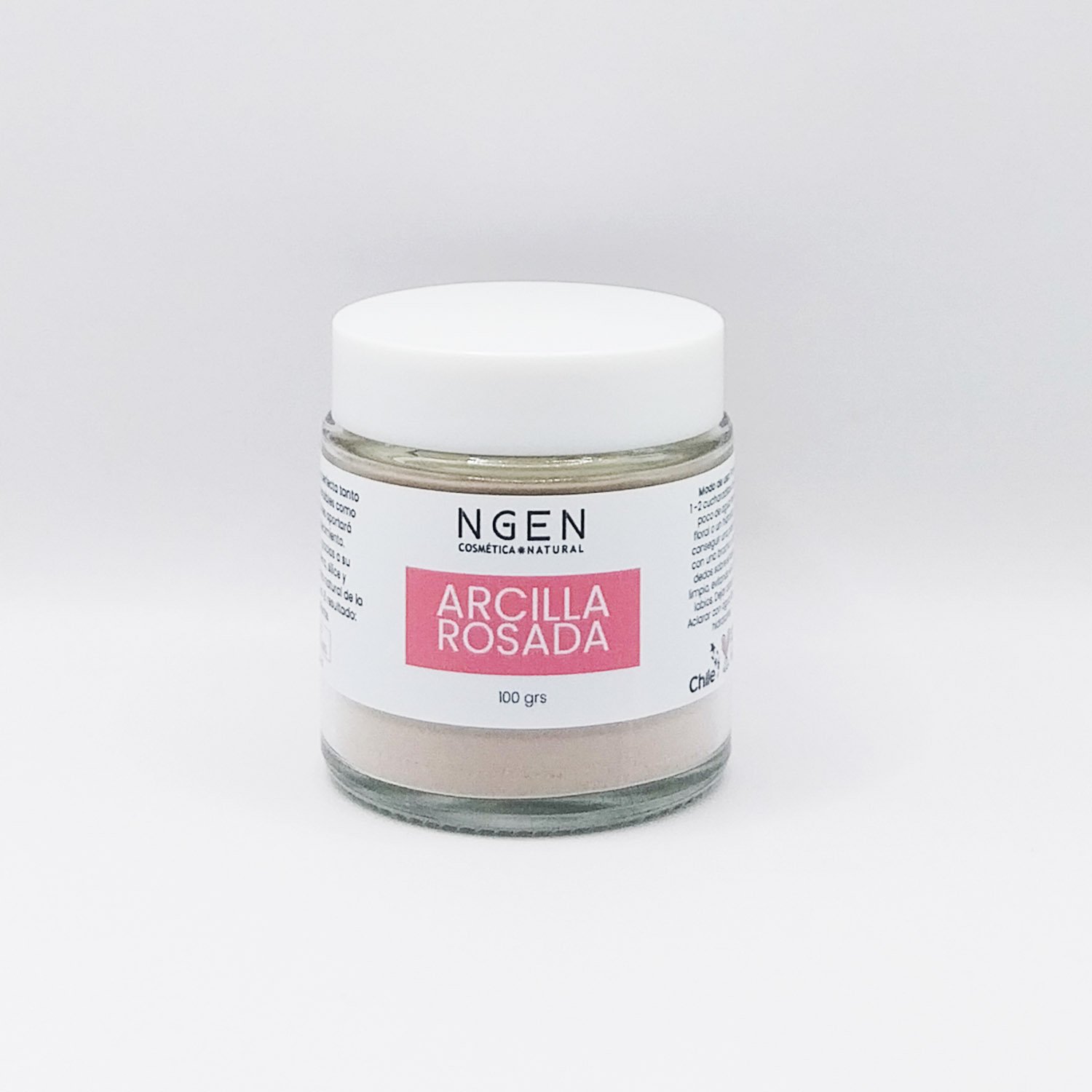
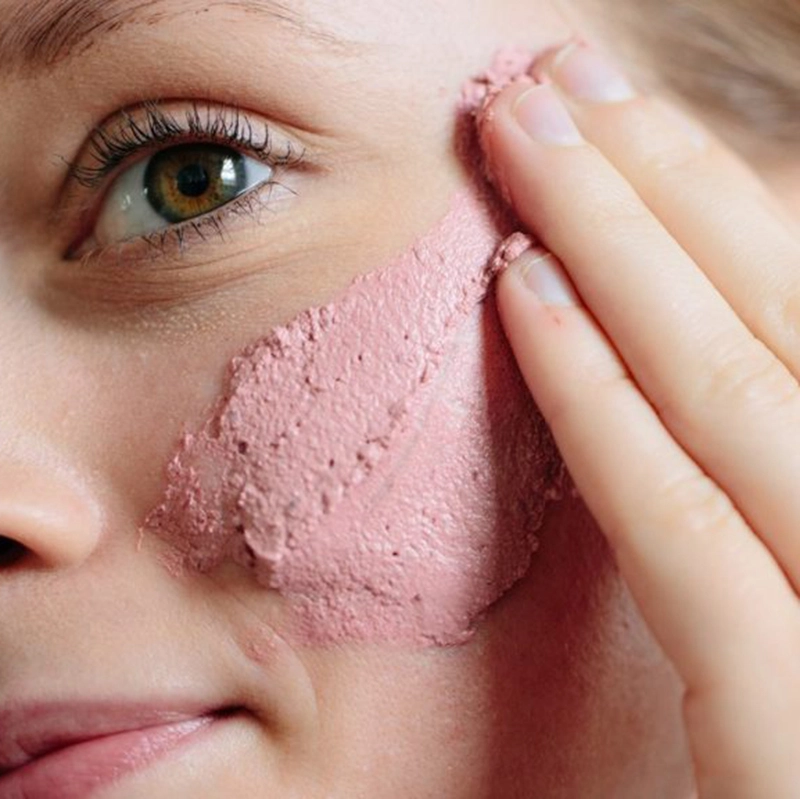
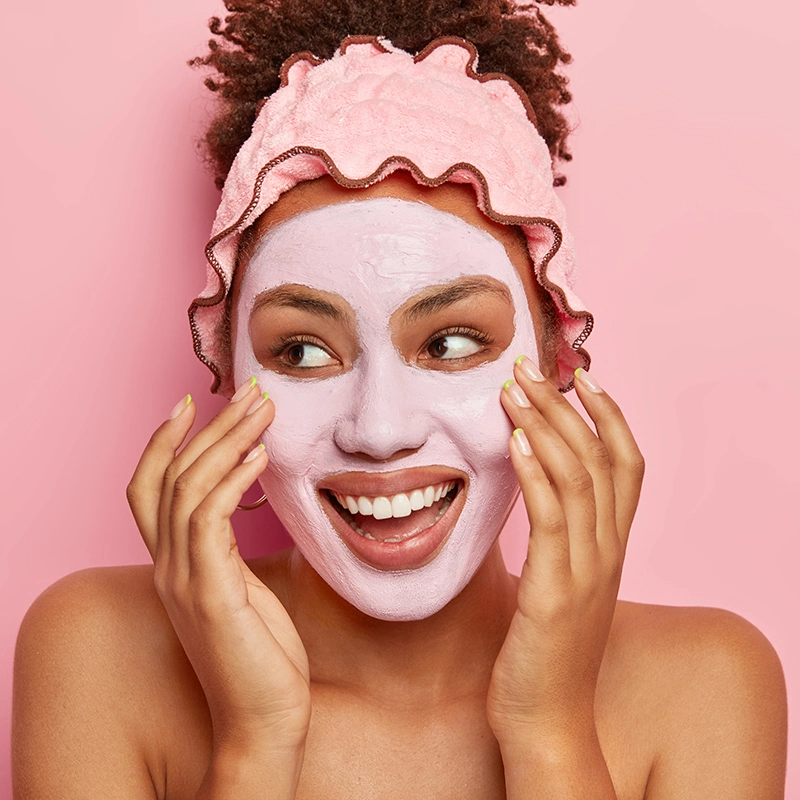
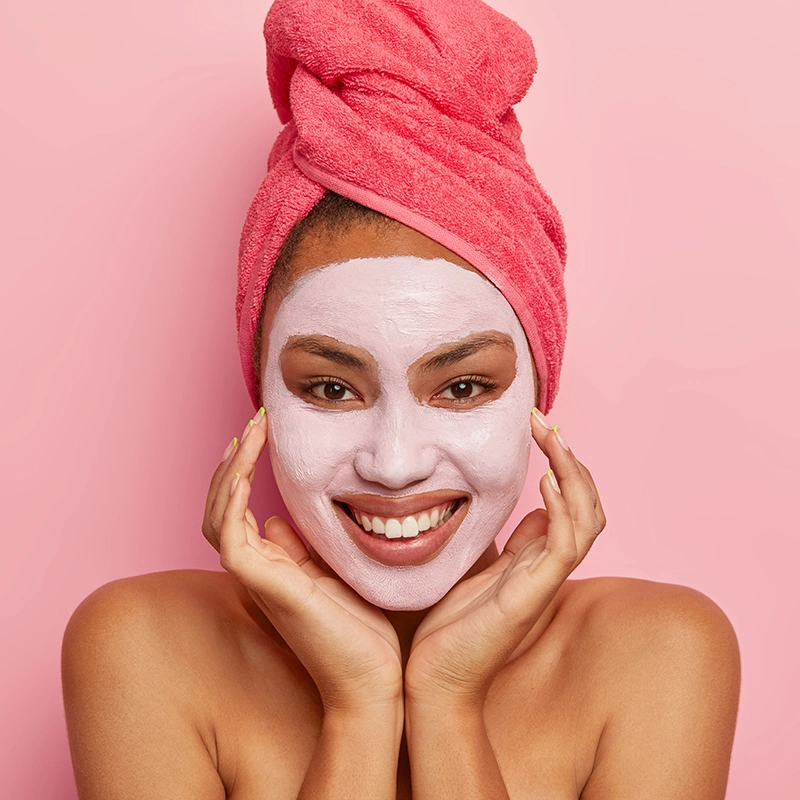
La arcilla rosada australiana entrega grandes propiedades y beneficios. Se emplea con frecuencia para los tipos de pieles fundamentalmente sensibles, porque ésta contribuye a una limpieza bien profunda sin generar ningún tipo de daños.
Este tipo de arcilla rosa es muy común en la elaboración de exfoliantes, de jabones, de tratamientos pro-aging, de mascarillas entre otros, para el cuidado de la piel. Son muchos los beneficios proporcionados para embellecer y cuidar la piel.
A veces, dependiendo del tipo de arcilla que utilicemos podemos notar una sequedad muy incómoda o incluso más irritación de la cuenta; por ello es muy importante saber distinguir y entender cuál es el que puede adaptarse mejor a nuestra piel.
Beneficios de la Arcilla Rosada
- Cuida las pieles más sensibles y delicadas, a diferencia de la arcilla o la blanca que no se recomiendan mucho para este tipo de piel porque las puede irritar mucho o generar otros males indeseados.
- Limpia el cutis, ayuda a mostrar un rostro sin sebo, ni acné o espinillas u otras deterioros de la piel como consecuencia de la suciedad acumulada.
- Deja la piel suave como la seda, los componentes presentes en la arcilla rosa como el hierro, el sílice y minerales son los responsables de dejar la piel del cutis súper suave y sedosa.
- Retrasa el envejecimiento cutáneo, usualmente se recomienda su uso para retrasar el envejecimiento prematuro porque tiene altos componentes de antioxidantes, los cuales hacen frente a los llamados radicales libres, ayudando a mantener la piel bella, lisa y joven por mucho más tiempo.
- Estimula la regeneración de la piel, si deseas limpiar tu rostro de manchas, y regenerar los tejidos de la piel, al tiempo que curar heridas cicatrizándolas rápidamente, es una excelente opción que aporta una suave hidratación manteniendo el brillo que merece tu piel y además remueve las células muertas.
- Elimina irritaciones, posee cualidades que actúan como calmantes, dando la oportunidad de cambiar esta situación molesta convirtiéndola en algo mejor y positivo para tu piel.
MODO DE USO
Mezcla una o dos cucharaditas de la arcilla con un poco de agua mineral sin gas, un hidrolato o agua floral, evitando siempre usar el agua del grifo. Remueve hasta que se forme una pasta uniforme, si te pasas de agua y la mascarilla queda muy líquida simplemente añade un poco más de arcilla.
Colócala sobre la piel por un lapso de 20 minutos. Posteriormente retira con bastante agua y aplica un tónico (si es floral mejor aún), por último nutre la piel del rostro con una crema humectante.
Bibliografía
-
Adib-Hajbaghery, M., Adib-Hajbaghery, M., & Mashaiekhi, M. (2014). The effects of Bentonite and Calendula on the improvement of infantile diaper dermatitis. Journal of Research in Medical Sciences, 19(4), 314–318.
https://pmc.ncbi.nlm.nih.gov/articles/PMC4115346/ -
Bastos, C. M., & Rocha, F. (2023). Experimental Peloid Formulation Using a Portuguese Bentonite and Different Mineral-Medicinal Waters Suitable for Therapeutic and Well-being Purposes. Clays and Clay Minerals.
https://link.springer.com/article/10.1007/s42860-023-00260-6 -
Cao, L., Xie, W., Cui, H., et al. (2022). Fibrous Clays in Dermopharmaceutical and Cosmetic Applications: Traditional and Emerging Perspectives. International Journal of Pharmaceutics, 628, 122097.
https://www.sciencedirect.com/science/article/abs/pii/S0378517322006512 -
Carretero, M. I. (2002). Clay minerals and their beneficial effects upon human health: A review. Applied Clay Science, 21(3–4), 155–163.
https://www.sciencedirect.com/science/article/abs/pii/S0169131701000850 -
da Silva Favero, J., dos Santos, V., Weiss-Angeli, V., et al. (2025). Physicochemical Characterization and Safety Assessment of Cosmetic Gels and Emulsions Containing Sand-Extraction Clays. Journal of Cosmetic Dermatology, 24(10), e70517.
https://pmc.ncbi.nlm.nih.gov/articles/PMC12547854/ -
Epstein, W. L. (1989). Topical prevention of poison ivy/oak dermatitis. Archives of Dermatology, 125(4), 499–501.
https://pubmed.ncbi.nlm.nih.gov/2522756/ -
Fowler, J. F. Jr. (2001). A skin moisturizing cream containing Quaternium-18-Bentonite effectively improves chronic hand dermatitis. Journal of Cutaneous Medicine and Surgery, 5(3), 201–205.
https://pubmed.ncbi.nlm.nih.gov/11685665/ -
Kaboré, P. A. M., Ouédraogo, R., Sombié, B. C., et al. (2025). Clay minerals used in formulations for cutaneous wound healing: An educational review. Health Sciences Review, 100242.
https://www.sciencedirect.com/science/article/pii/S2772632025000340 -
López-Galindo, A., Viseras, C., & Cerezo, P. (2007). Compositional, Technical and Safety Specifications of Clays to Be Used as Pharmaceutical and Cosmetic Products. Applied Clay Science, 36(1–3), 51–63.
https://www.sciencedirect.com/science/article/abs/pii/S0169131706001451 -
Mahmoudi, M., Adib-Hajbaghery, M., & Mashaiekhi, M. (2015). Comparing the effects of Bentonite & Calendula on the improvement of infantile diaper dermatitis: a randomized controlled trial. Indian Journal of Medical Research, 142(6), 742–746.
https://pmc.ncbi.nlm.nih.gov/articles/PMC4774071/ -
Marks, J. G. Jr., Fowler, J. F., Sheretz, E. F., et al. (1995). Prevention of poison ivy and poison oak allergic contact dermatitis by quaternium-18 bentonite lotion. Journal of the American Academy of Dermatology.
https://pubmed.ncbi.nlm.nih.gov/7622647/ -
Mattioli, M., Giardini, L., Roselli, C., & Desideri, D. (2016). Mineralogical characterization of commercial clays used in cosmetics and possible risk for health. Applied Clay Science.
https://www.researchgate.net/publication/283452702_Mineralogical_characterization_of_commercial_clays_used_in_cosmetics_and_possible_risk_for_health -
Misiņa, S. M., et al. (2020). Lake Zeiļu Clay Application Induced Changes in Human Skin Microcirculation, Moisture and Sebum Content. Cosmetics, 7(3), 51.
https://www.mdpi.com/2079-9284/7/3/51 -
Moosavi, M. (2017). Bentonite Clay as a Natural Remedy: A Brief Review. Iranian Journal of Public Health, 46(9), 1176–1183.
https://pmc.ncbi.nlm.nih.gov/articles/PMC5632318/ -
Valenti, D. M. Z., Silva, J., Teodoro, W. R., Velosa, A. P., & Mello, S. B. V. (2012). Effect of topical clay application on the synthesis of collagen in skin: An experimental study. Clinical and Experimental Dermatology, 37(2), 164–168.
https://pubmed.ncbi.nlm.nih.gov/22340693/ -
Velasco, M. V. R., et al. (2016). Characterization and Short-Term Clinical Study of Clay Facial Mask. Revista de Ciências Farmacêuticas Básica e Aplicada, 37(1).
https://rcfba.fcfar.unesp.br/index.php/ojs/article/download/347/329 -
Viseras, C., Carazo, E., Borrego-Sánchez, A., et al. (2019). Clay minerals in skin drug delivery. Clays and Clay Minerals, 67(1), 59–71.
https://www.cambridge.org/core/journals/clays-and-clay-minerals/article/abs/clay-minerals-in-skin-drug-delivery/994718F076CE8E6EF35711F5774549F3 -
Zafar, K., Lee, A., Wang, J. Y., et al. (2024). The potential cutaneous benefits of bentonites and montmorillonites. Archives of Dermatological Research, 316, 702.
https://link.springer.com/article/10.1007/s00403-024-03456-5 -
Zhang, X., Zhang, Z., Tao, H., et al. (2023). Comprehensive assessment of the efficacy and safety of a clay mask in oily and acne skin. Skin Research and Technology, 29(11), e13513.
https://pmc.ncbi.nlm.nih.gov/articles/PMC10626287/